
Occupational Therapy for Children and Teens
Supporting development through connection, movement and play
At North Shore Kids Therapy, we believe that understanding a child is the foundation of meaningful therapy.
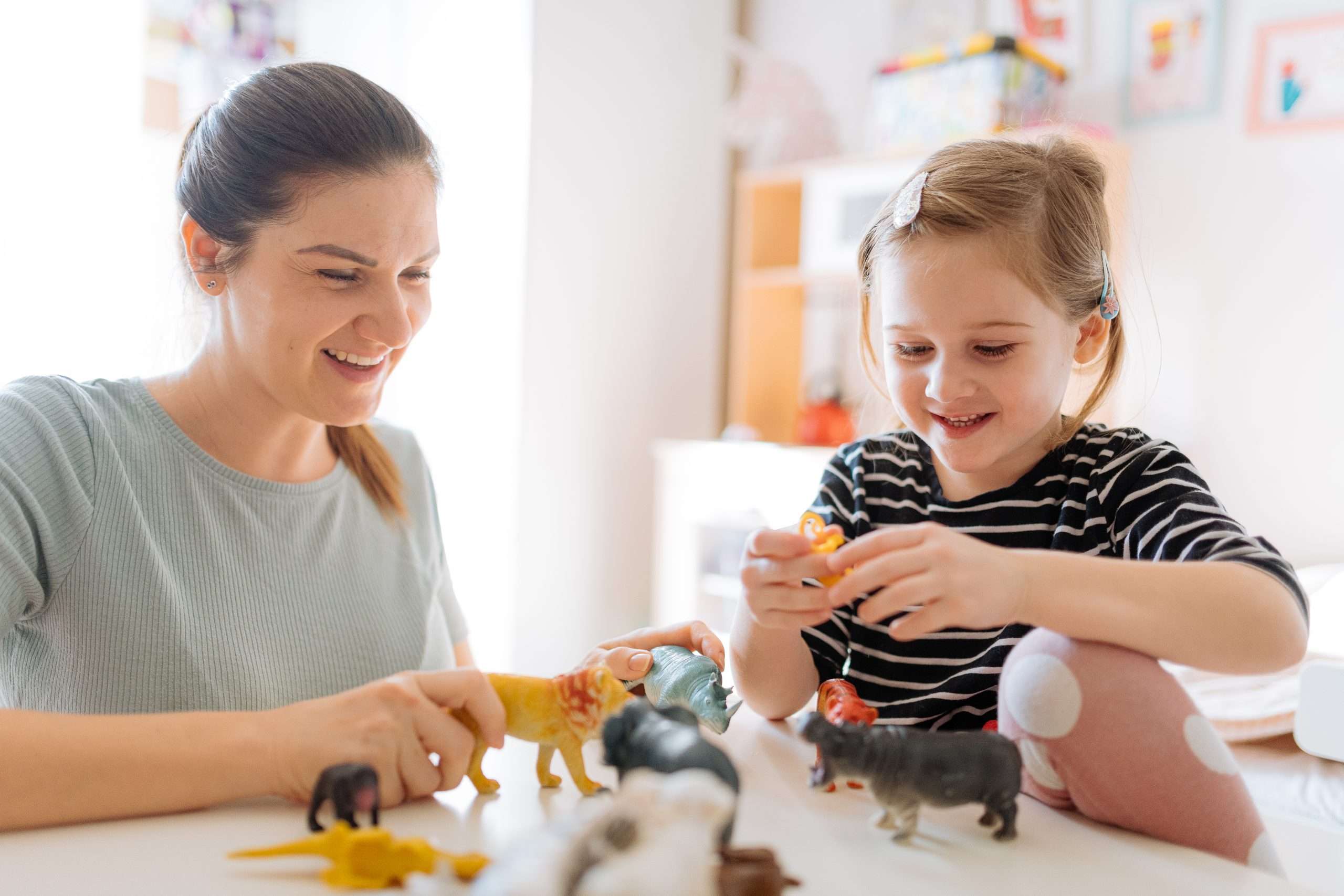
Understanding the whole child
Our paediatric Occupational Therapists look beyond individual skills or behaviours to understand how a child’s nervous system, sensory processing, motor development, emotional wellbeing and relationships influence their ability to participate in everyday life.
Through play-based, relationship-focused and sensory-rich experiences, we support children to develop the foundations for learning, connection, independence and participation – always recognising their unique strengths, interests and developmental needs.
Looking Beyond the Surface
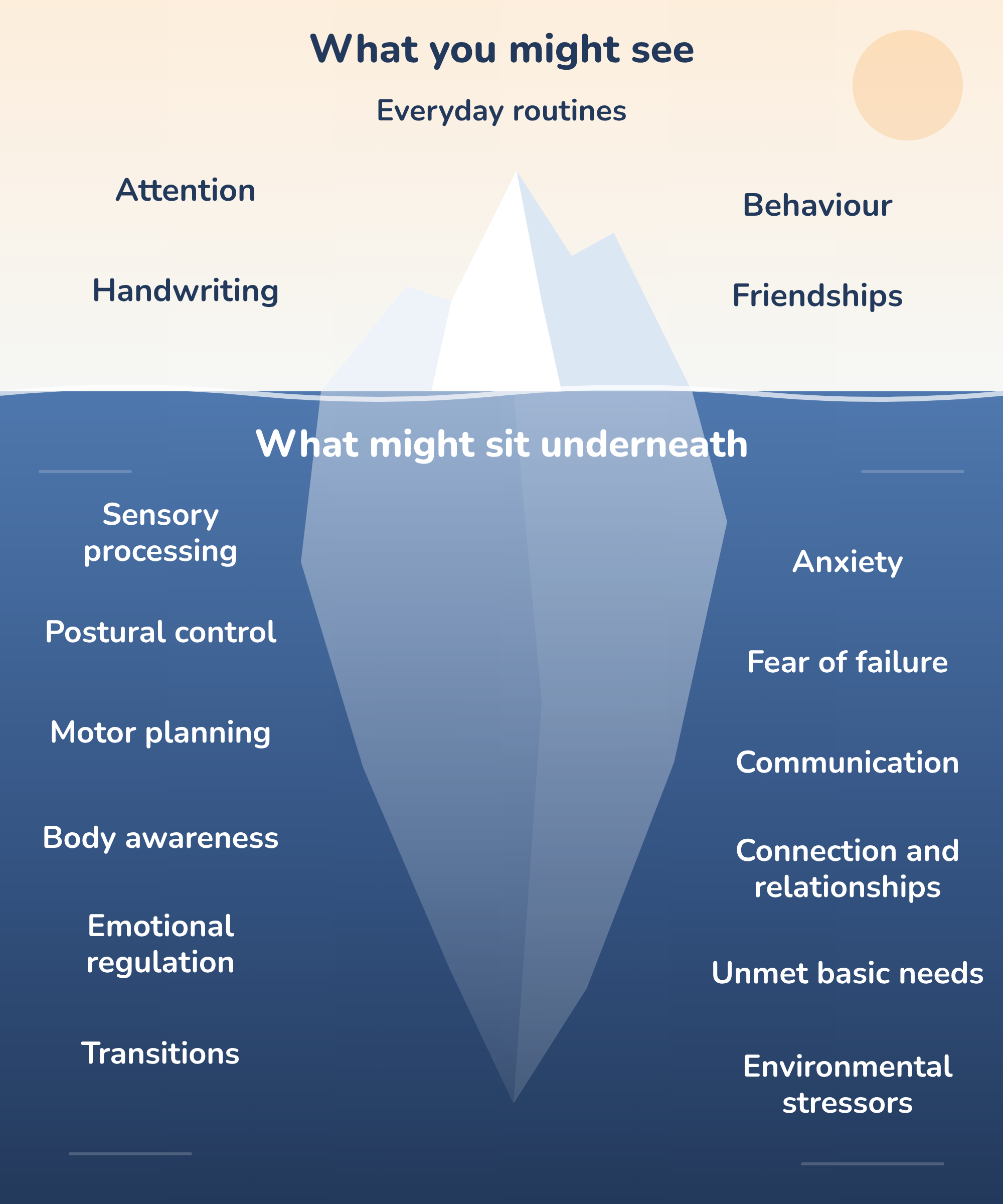
Children’s development is complex and interconnected. What might appear to be difficulty with attention, behaviour, handwriting, friendships or everyday routines can reflect differences in the underlying developmental skills and systems that support participation.
For example, a child who finds it difficult to sit and concentrate in the classroom may be navigating sensory overload, challenges with postural control, motor planning or emotional regulation.
Rather than focusing only on the visible difficulty, we take time to explore why an activity might be challenging.
Our approach considers the whole child, including their sensory experiences, movement, communication, emotional development, relationships and environment.
By understanding these interconnected factors, we can identify meaningful ways to support each child’s participation in the activities and experiences that matter to them.
How Our Occupational Therapists Can Help
Our Occupational Therapists work with children and young people across a broad range of developmental and functional needs, including:

Sensory Processing
Understanding and responding to sensory information, including sensitivities, sensory seeking, body awareness and the impact of sensory experiences on everyday participation.

Daily Living Skills & Independence
Supporting participation in dressing, toileting, grooming, mealtimes, sleep routines and other everyday activities, with consideration for each child’s developmental readiness and sensory needs.

Emotional Regulation
Supporting children to recognise and navigate emotional experiences, develop regulation capacities & access the relationships, environments & strategies that help them feel safe and supported.

Play, Social Connection & Participation
Supporting the developmental foundations for shared play, social engagement, peer relationships, flexibility and meaningful participation in family, school and community life.

Motor Planning & Coordination
Supporting body awareness, balance, postural control, bilateral coordination, praxis and the planning and execution of movements needed for play and everyday activities.

Attention, Executive Functioning & Learning
Exploring the sensory, motor, emotional and cognitive factors that influence attention, task initiation, organisation, transitions and participation in learning environments.

Fine Motor Skills & Handwriting
Developing the motor foundations and practical skills involved in drawing, writing, using tools, manipulating objects and participating in classroom activities.

School Participation & Transitions
Working alongside children, families & educators to understand barriers to participation & develop supportive approaches to classroom engagement, school readiness and school-related distress.
我們的做法
We recognise that children learn and develop through meaningful experiences, supportive relationships and opportunities to explore their world.
Our approach integrates developmental, sensory integration, play-based and relationship-focused frameworks, informed by current research and clinical expertise.

Relationship-Based & Child-Led
Connection is central to our therapy. We follow children’s interests, motivations and communication, using play and shared experiences to establish meaningful engagement and build trusting relationships.
Rather than expecting children to fit a predetermined therapy agenda, we adapt our interactions and activities to their individual developmental capacities and needs. Once engagement is established, our therapists intentionally introduce and gradually increase the level of challenge, creating opportunities to extend developmental capacities, build new skills and support growth.
Our approach balances child-led exploration with purposeful therapeutic guidance, ensuring activities are both meaningful and appropriately challenging.
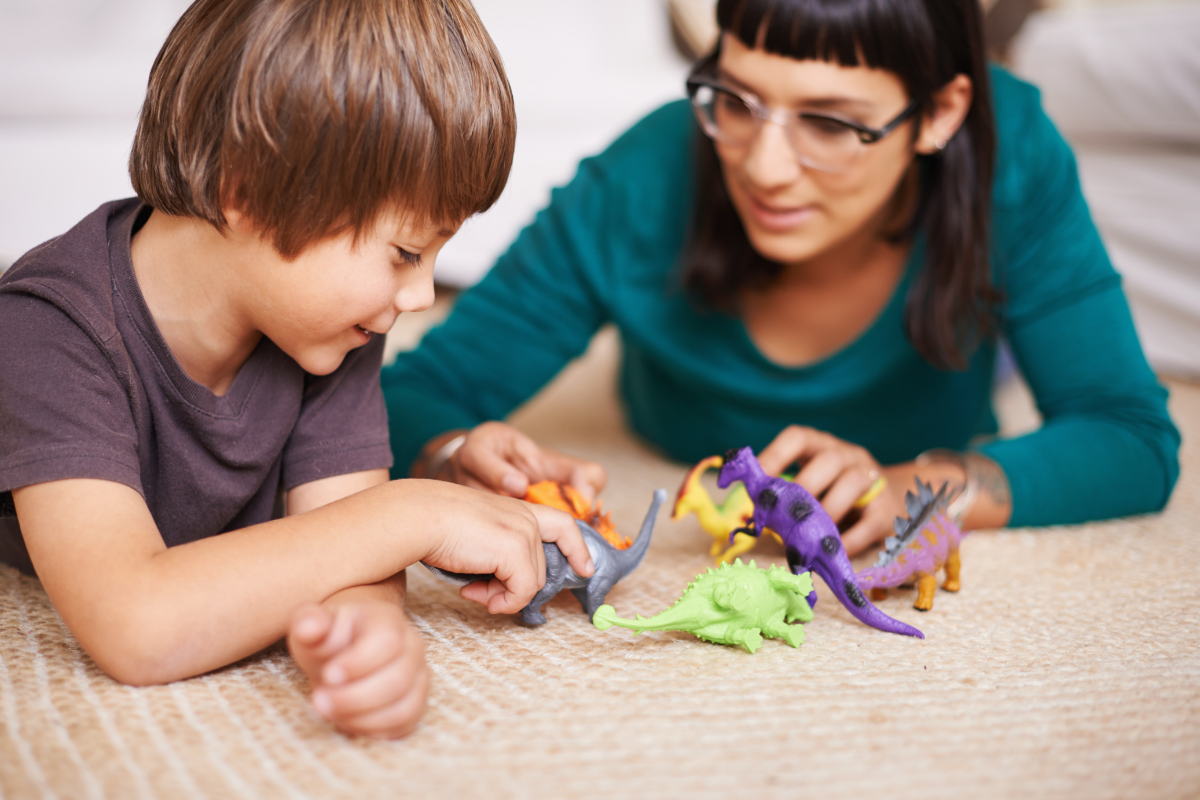
Regulation before expectation
A child’s capacity to engage, communicate, learn and participate can change depending on their emotional state, sensory environment and available supports.
We prioritise understanding each child’s nervous system and supporting co-regulation, emotional safety and connection.
Our focus is not on teaching children to suppress their responses or simply comply with expectations, but on understanding their needs and developing meaningful, sustainable supports.
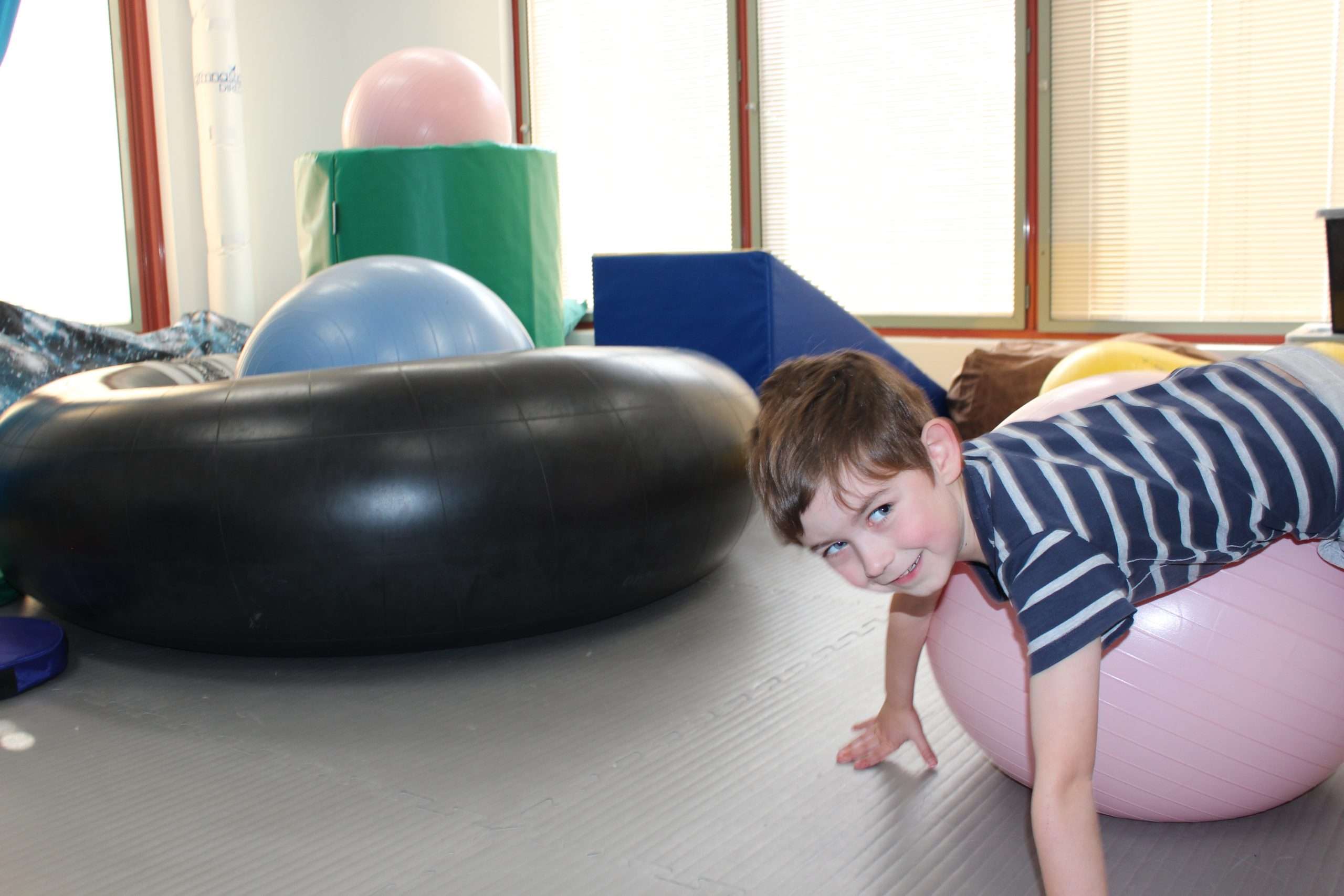
Sensory-motor foundations
Sensory processing and movement play important roles in how children experience and interact with their world.
Our therapists consider how vestibular, proprioceptive, tactile and other sensory systems contribute to body awareness, motor coordination, regulation and everyday participation.
Through individualised sensory-motor experiences, we provide opportunities for children to explore movement, develop body awareness and engage in activities relevant to their developmental goals.

Working Together with Families
Parents and carers bring invaluable knowledge about their child.
We work collaboratively with families to understand their priorities, share clinical insights and explore practical ways to support participation beyond the therapy room.
Where appropriate, we also collaborate with educators and other professionals to support a consistent, individualised approach across environments.
Every Therapy Room Is a Sensory Gym
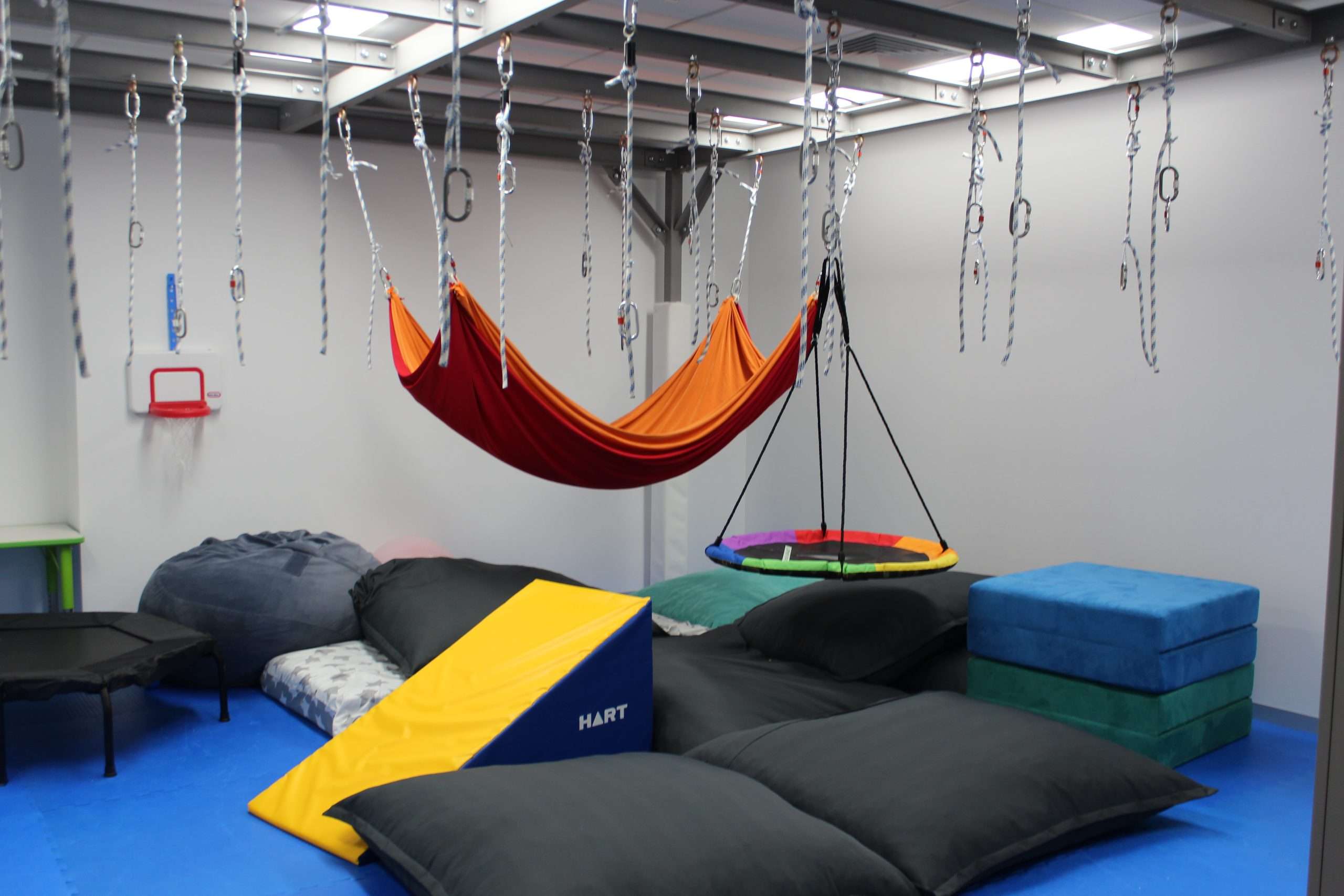
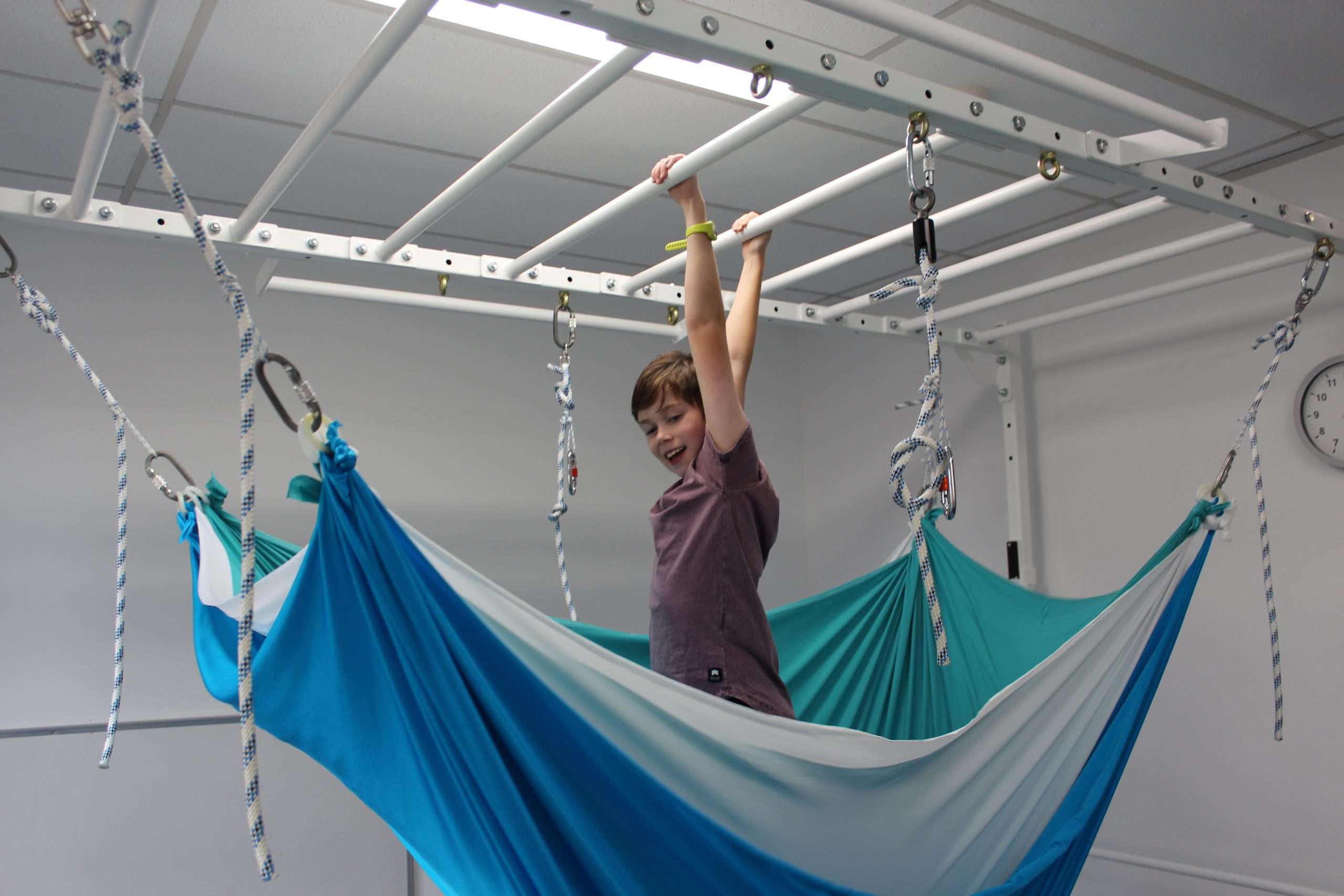
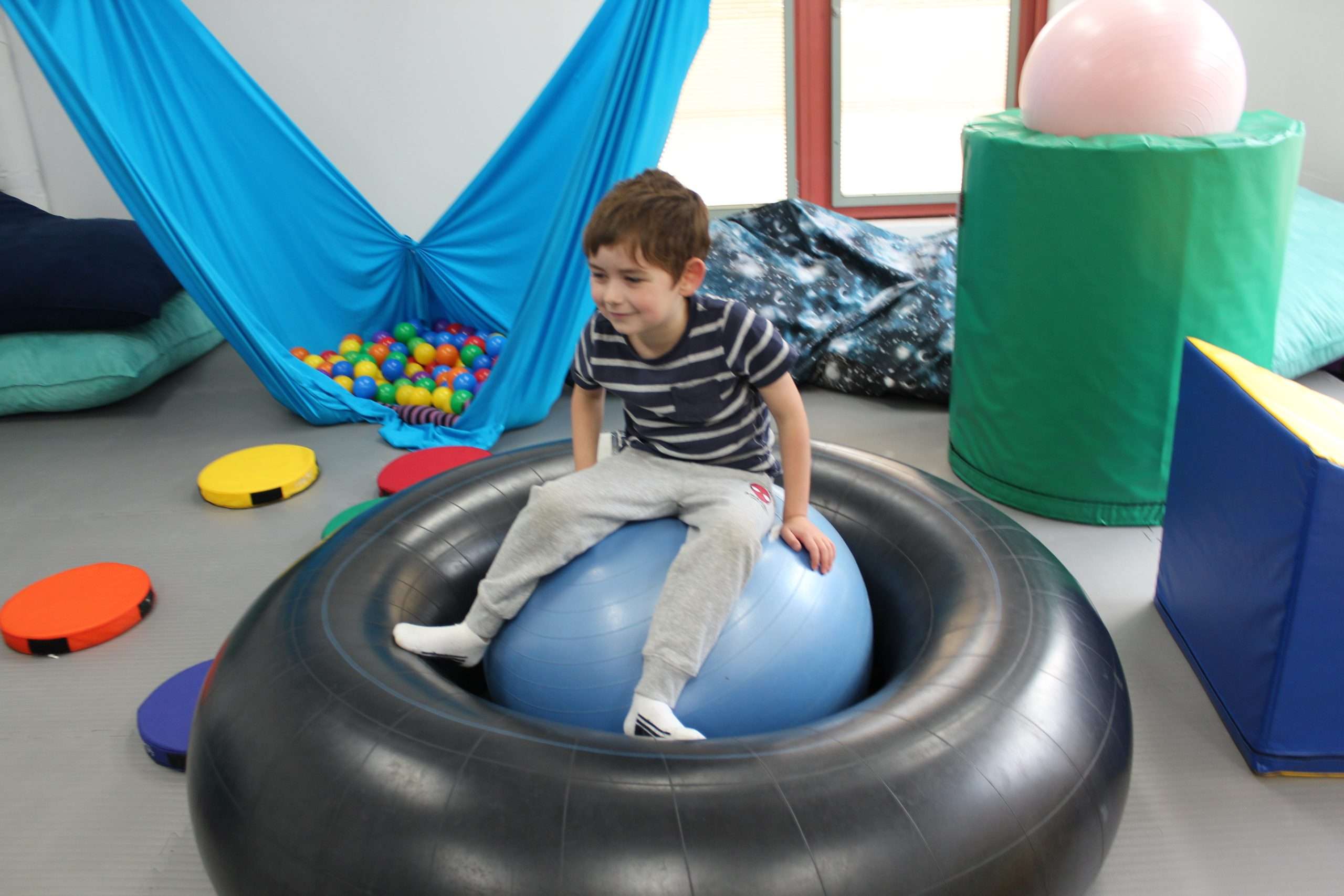
Our clinic features five purpose-built sensory integration gyms, providing dedicated spaces for movement, play and sensory exploration.
With specialised equipment including swings, suspended apparatus, climbing and movement opportunities, our therapists can thoughtfully adapt activities to each child’s sensory profile, developmental capacities and therapeutic goals.
These environments allow us to incorporate whole-body movement, sensory experiences and playful interactions into therapy, creating opportunities to explore the sensory-motor foundations that contribute to everyday participation.
Our sensory gyms are not simply spaces to burn energy – they are carefully designed therapeutic environments where movement, play and relationships come together.
Who Can Benefit from Occupational Therapy?
We support children and young people from infancy through adolescence, including those who:
- Are autistic, have ADHD or other neurodevelopmental differences
- Experience sensory processing differences
- Have difficulties with emotional regulation or experience frequent overwhelm
- Have developmental coordination differences, dyspraxia or motor planning challenges
- Find handwriting, fine motor tasks or classroom participation difficult
- Need additional support with self-care and everyday routines
- Experience challenges with social participation, play or peer relationships
- Find school environments, transitions or everyday demands difficult to navigate
- Have developmental delays or complex support needs
A diagnosis is not required to access Occupational Therapy.
We recognise that every child has a unique developmental profile, and our role is to understand and support their individual needs rather than define them by a diagnosis.
What Does Occupational Therapy Look Like?
No two children are the same, and neither are their therapy sessions.
Depending on your child’s needs and goals, sessions may involve movement and sensory-motor activities, imaginative or interactive play, practical skill development, emotional regulation support, collaborative problem-solving and parent coaching.
Our therapists thoughtfully balance child-led exploration with intentional therapeutic planning, drawing on clinical reasoning to adapt activities and interactions as sessions unfold.
We also recognise that meaningful progress is not always linear or immediately visible. Changes in participation, confidence, connection and everyday experiences can take many forms.
Throughout the therapy process, we work alongside families to review goals, share observations and ensure support remains relevant to the child’s evolving needs.
Let’s Understand Your Child Together
Whether you’re seeking support for sensory processing, emotional regulation, motor development, everyday independence or broader developmental needs, we’re here to help you explore what support might be appropriate for your child.
Our team takes the time to listen, understand your concerns and work collaboratively towards goals that are meaningful to your child and family.